OPINION COLUMN
By JOHN KEREZY, eyeoncleveland.com founder
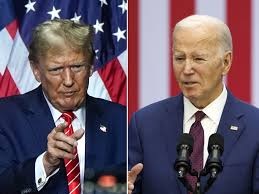
The upcoming 2024 presidential debate on Thursday in Atlanta might well become among the last ones ever, These debates are no longer under the auspices of the bi-partisan Commission on Presidential Debates, or the League of Women Voters, which sponsored them in the 1970s and ‘80s. Instead, the campaigns themselves have set up debate details. That is an ill omen.
The manner in which Thursday’s debate came about is also very telling. The two presidential campaigns resorted to social media to basically “bait” each other about Thursday’s debate. Republican presidential nominee Donald Trump refused to participate in any of the Republican primary debates. This bodes badly for the future of the presidential debate process.
I know a bit about presidential debates. I had media credentials and was in Public Auditorium for the first presidential debate in Cleveland, Ronald Reagan vs. Jimmy Carter, in October 1980. I have taught media, journalism and communication studies at Cuyahoga Community College for 20 years. Additionally, I served as a speech and debate coach at Brecksville-Broadview Heights and Revere High Schools in Northeast Ohio for 13 years. In the latter capacity, I helped student debaters vie for a national championship in Congressional Debate both at the middle and high school levels.

My former high school debaters could teach President Joe Biden and former President Donald Trump a few things, especially about staying on topic and refraining from personal attacks.
Superior debaters make arguments (or contentions), support them with warrants – evidence – and then explain the impacts or the outcome of their arguments or their opponents’ contentions if they were to be adopted. Sadly, a greater number of recent presidential debates have degenerated to increasing numbers of personal attacks instead of substantive debate and public discourse on the major issues affecting Americans.
I agree with many of the recommendations which in a White Paper titled, Discourse Correction: What’s wrong with the Presidential debates, and how to fix them, from the Princeton University Center for the Study of Democratic Politics. Want to see a copy of this White Paper? Here’s a link to obtain it:
The Princeton White Paper proposed many good and strong improvements in the debate process, such as stopping personal attacks, penalizing debaters by subtracting time from them for rules violations and interruptions, and shutting off microphones at time limits. It’s really telling that there were only six personal attacks in the debate before 2016, versus more than 60 in the 2016 and 2020 debates. There was just one instance of crosstalk in the Bush v. Kerry debate in 2004. There were 76 in the first Biden v. Trump debate in 2020. These types of tactics would never be allowed on the high school debate circuit.
In 1960, the first presidential debates facilitated the marriage of politics and a new and upcoming medium, television. By 2024, both candidates’ campaign managers and social media directors will be posting video snippets from the debate in real time on the latest type of media outlet, social media platforms.
Before social media, there were ‘spin rooms’ where members of each presidential candidate would talk with reporters and explain why their candidate won the debate. Now social media campaigners are spinning each important remark made in the debate moments after they happen, in real time.
It’s noteworthy that this is the earliest presidential debate ever on the presidential election campaign calendar. Multiple media reports indicate that the Biden campaign wanted the early debate. “President Biden, trailing in polls, is hoping to shake up the race and mitigate political risk,” read a May 15 news analysis in The New York Times. (See link at the bottom of this column.)
Also, this is also the first presidential debate that will lack a live audience. This move, which was a stipulation of the Biden Campaign, eliminates an important gauge of the debaters’ effectiveness from public purview.
Modern presidential debates, which began in 1960, were modeled after the famous Lincoln Douglas debates, which were held in Illinois in 1858. Both Abraham Lincoln and Stephen Douglas were campaigning to be elected to the U.S. Senate, and they held a series of seven debates across the state. Upwards of 10,000 Illinois residents attended the debates, according to newspaper accounts at the time, and the two debaters traveled about 4,000 miles across Illinois – by horse or train – for the debates.
It was the Lincoln-Douglas debate format which was utilized to help develop the first televised presidential debates, Richard Nixon vs. John Kennedy, in the 1960 presidential election campaign. You want to see a ballot for today’s high school Lincoln-Douglas debate? Click here for a copy.
Even during Covid-19 in 2020, the debaters knew there was an audience in the auditorium reacting to their every sentence. We – the viewing public – will be deprived of ever knowing how a live audience would have reacted to strong comments the two debaters might make Thursday night.
However, interest in the debates remains high. An Adweek story cites a poll from Puck News and Echelon Insights which states that 63% of the American public plans to watch the Thursday night debate. (see link below).
But future presidential debates are in jeopardy. Our media has become so segmented, and the campaign process so poll-driven and scientific, that nowadays political campaigns are relying on social media and cell phones messages to carry key messages to their supporters and to sway undecided voters. This bodes badly for the basic concept which was the underpinning purpose of presidential debates from the onset, to give all the voters an opportunity to learn about the candidates and their key issues from seeing and hearing them in a lengthy (90 minute or longer) format.
Campaigns are losing interest in presenting their candidates this way, and that’s a loss for democracy.
Want to judge the debate for yourself? Here’s a debate ballot composed for Thursday night’s debate.
(ASIDE: If this subject interests you, be sure to visit the website of the Ohio Speech and Debate Association. There are more than 125 active high school and middle school speech and debate programs across the Buckye state.) Here’s the link to it: https://sites.google.com/view/theosda
According to C-SPAN, here are the rules for Thursday’s presidential debate. CNN’s Dana Bash and Jake Tapper are the two moderators.
JUNE 27 PRESIDENTIAL DEBATE RULES (Source: C-SPAN)
1.) Hosted by CNN
2.) Debate Moderators – Jake Tapper and Dana Bash
3.) Two commercial breaks during the debate, candidates may not talk to staff during the commercial breaks.
4.) Candidates will not make an opening statement, but will be able to make a two minute closing statement.
5.) Candidates have two minutes to answer questions and have a one- minute rebuttal.
6.) Candidates will stand at lecterns during the debate and microphones will be muted when it is not their turn to speak.
7.) There will be no audience in the room during the debate.
FOUR TOP MOMENTS IN PAST PRESIDENTIAL AND VICE PRESIDENTIAL DEBATES
- Free Poland? In the second 1976 debate in San Francisco, focused on foreign policy, President Gerald Ford stated that there was no Soviet domination of Eastern Europe. Even after debate moderator Max Frankel (New York Times) rephrased the question, giving Ford an opportunity to recant, he stated inaccurately that Poland was a free nation. It was a major gaffe, one that perhaps cost him the election and made Jimmy Carter president. For details, see Jeff Greenfield’s story here: https://www.politico.com/news/magazine/2024/05/09/1976-election-gerald-ford-jimmy-carter-00155322 See the debate video here: https://youtu.be/PfyL4uQVJLw
- Reagan still had it. Although polls showed him ahead, President Ronald Reagan looked and spoke poorly in his second 1984 debate against his opponent, former Vice President Walter Mondale. But Reagan didn’t earn the nickname The Great Communicator by not taking advantage of every opportunity that presented itself. In the third debate, in Kansas City, when questioner Henry Trewhitt (Baltimore Sun) asked if Reagan would be able to handle his duties in a prolonged crisis, the president quipped, “I am not going to exploit, for political purposes, my opponent’s youth and inexperience.” The audience laughed. Mondale, his opponent, grinned at the remark. It was game set and match, and in the general election Reagan captured 58.8% of the popular vote and 525 electoral votes. See the debate video here: https://youtu.be/0RtXmnUe9s0
- “You’re no Jack Kennedy” In the 1988 Vice Presidential Debate in Omaha, Senators Dan Quayle (R-Indiana) and Lloyd Bentsen (D-Texas) squared off. Ohio Congressman Dennis Eckart served as a debate sparring partner against Bentsen during practice sessions in the days prior to the debate. Bentsen gave a dismissive answer to a statement Eckart made comparing Quayle with John F. Kennedy. On the campaign stump, Quayle was telling voters that he had the same amount of governmental experience that Kennedy had when he ran for the presidency in 1960. Eckart helped Bentsen immensely.
When Quayle offered the comment in the debate that he was as prepared as Kennedy, Bentsen shot back hard with these words: “I served with Jack Kennedy. I knew Jack Kennedy. Jack Kennedy was a friend of mine. And senator, you’re no Jack Kennedy.” Watch the clip here: https://www.nbcnews.com/video/1988-vp-debate-flashback-senator-you-re-no-jack-kennedy-772079171647 Read the Time magazine story about this here: https://content.time.com/time/subscriber/article/0,33009,968699-2,00.html - “Such a nasty woman.” In the third and final presidential debate in Las Vegas on October 19, 2016, former President Donald Trump talked over a lengthy answer to former Senator Hillary Clinton gave to the public and moderator Chris Wallace (then with Fox News) about saving Social Security. Clinton interspersed her answer with an attack on Trump and paying taxes, and he responded with the words “Such a nasty woman.” The clip went viral, and both campaigns employed the clip and the hashtag #nastywoman for a variety of purposes for the rest of the election campaign. Watch the clip here: https://youtu.be/Q2KOQfZ0Zd0 Here is a story about the incident: https://www.pbs.org/newshour/politics/trump-calls-clinton-nasty-woman
If you want a listing of the dates and locations of all the Presidential and Vice Presidential debates, the University of California Santa Barbara’s American Presidency Project has compiled one. Here it is: https://www.presidency.ucsb.edu/documents/presidential-documents-archive-guidebook/presidential-campaigns-debates-and-endorsements-0
Cleveland has been a frequent place for debates. There were presidential debates in Cleveland in 1980 (Reagan v. Carter) and 2020 (Biden v. Trump), a vice presidential debate in 2004 (Chaney. v. Edwards) and also a Republican primary debate in 2015, and a Democratic primary debate in 2008.
Here’s a link to the Adweek story on public interest in the debates.
https://www.adweek.com/tvnewser/cnn-presidential-debate-joe-biden-donald-trump-puck-news
NOTE: As of June 24, CBS, ABC, NBC, and Fox News had agreed to CNN’s stipulations and will also simulcast the Thursday Presidential Debate live on their networks as will MSNBC and NewsNation.
Link to cited New York Times story is here: https://www.nytimes.com/2024/05/15/us/politics/trump-biden-debate-june.html
I can be reached at john.kerezy@tri-c.edu or at 216-987-5040 (office).
 eyeoncleveland