By CHRISTINA EASTER and JOHN KEREZY
Part One of Two Parts Here’s the link to Part One: https://wp.me/p6cQl4-VA
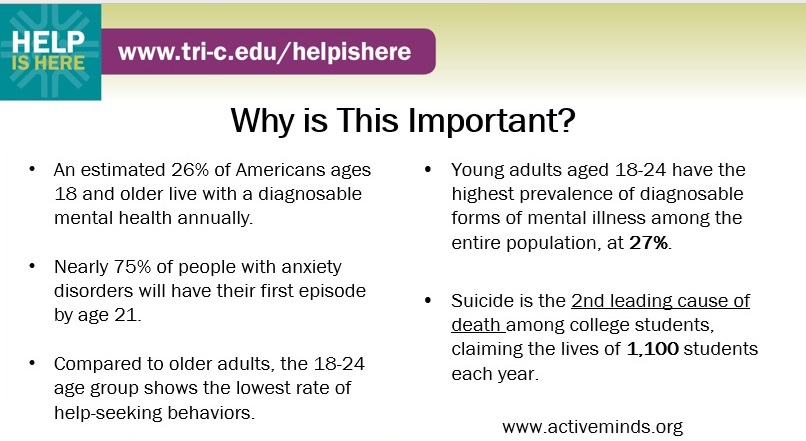
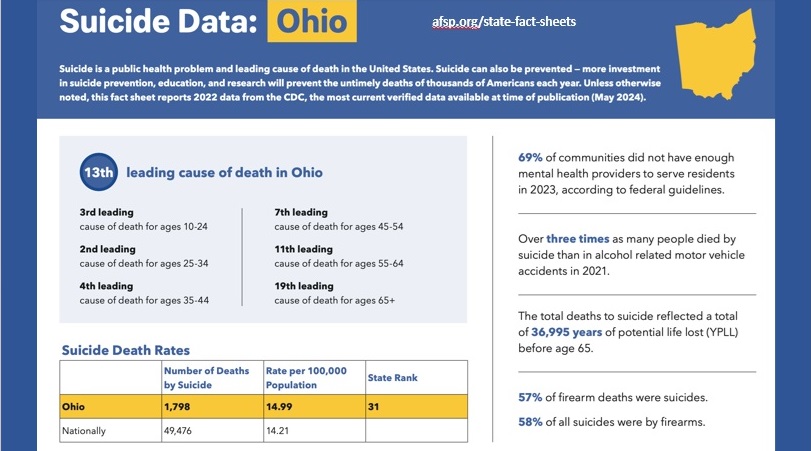
PARMA, Feb. 3 — The second leading cause of death for those ages 18-24 in the United States is suicide.
It is also 100 percent preventable, if there are sufficient education and resources to reach those at risk. A group of several Cuyahoga Community College professors have been striving to do just that, providing mental wellness resources as well as suicide prevention strategies to Tri-C students and those beyond the campus as well.
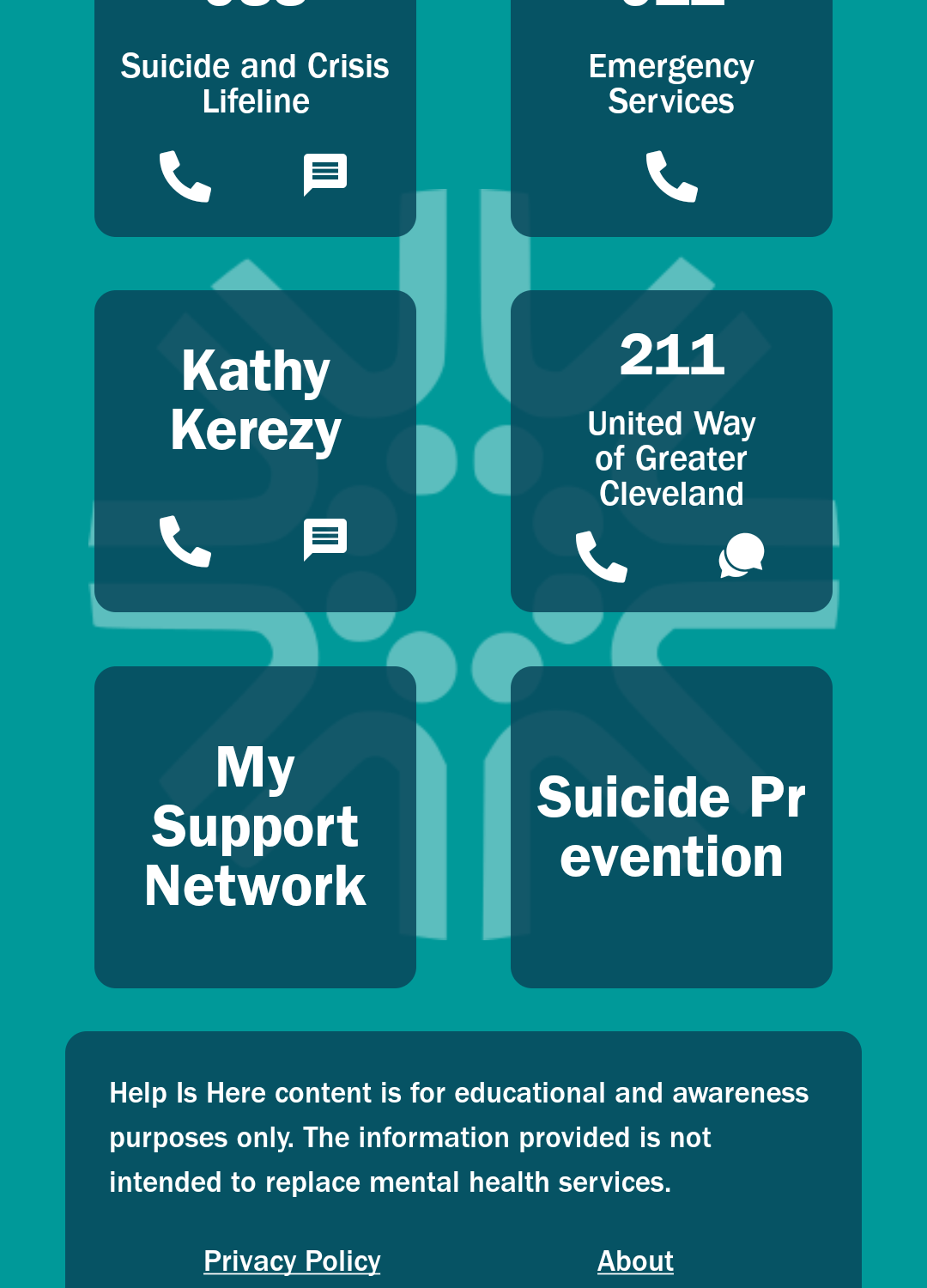
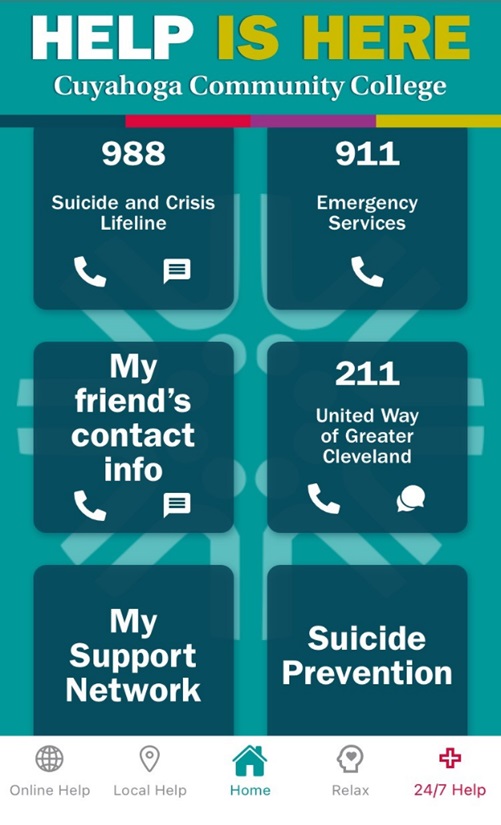
The college is now rolling out its latest “Help Is Here” (HIH) version of these resources, with financial assistance from both Ohio Dept. of Higher Education and education/training from the Northeast Ohio Medical University School (NEOMED). Important information about the program and a list of hotlines and resources are all available in one “card” on the main My Tri-C Space page. The information is also located at this link:
https://www.tri-c.edu/policies-and-procedures/mental-wellness-and-suicide-prevention/index.html
HIH information and resources are available both internally, for all Tri-C students, faculty and staff, and for the external community as well.
Four key simple steps that the group of professors leading HIH want all to know are:
- Stop the stigma
- Know the signs
- Have a conversation
- It’s OK to ask for help
“About a quarter of college-age population has some form of identifiable mental illness,” says Professor David Nardecchia, counselor at the West campus. “A lot of things that happen on the outside (of Tri-C) can influence what happens to a student on the inside here at Tri-C.”
Nardecchia and his colleagues, Professors Michelle Nicopolis, Kevin Berg, and Kevin Kuntz – members of the college’s Mental Wellness Team — presented a broad overview of the HIH program, as well as activities aimed at both mental wellness and suicide prevention at Tri-C’s Faculty Colloquium in early January.
BORN OUT OF TWO TRAGEDIES
Two teenage male suicides spurred action in 2009 and 2010. The first was a College Credit Plus (CCP) student who died by suicide on the West Campus in 2009. A year later, a high school senior named Joseph Anielski also succumbed to suicide. His mother, Marlene Anielski, was elected to the Ohio House of Representatives later that year, where she championed suicide prevention and mental wellness legislation.
At the same time, Tri-C began taking active steps to educate its faculty and staff about the important issue. Three professors, Dr. Monica Daugherty, Dr. Robert Johnson, and Dr. Nicopolis, began conducting suicide prevention training in 2010.
It’s important to remember that the Internet was still in its infancy when these tragedies took place. “We had handouts, and were giving out boatloads of resources in paper form to students (back then) Nardecchia recalls. “We felt a need to digitize the information, draw attention to available resources, and then make it very readily available to both Tri-C students and to those outside our community.”
Tri-Cs efforts continued and eventually coincided with passage of HB 543, which became law in 2013, requiring public schools, community charter schools, and technology, math, science and engineering schools to train their teachers and staff in suicide prevention.
Around this time, Nardecchia and the other professors came up with the umbrella name of Help Is Here, HIH, and intensified education and training sessions for their colleagues at Tri-C. These sessions focused on learning about identifying signs of students exhibiting mental health problems, and how to get help for them.
Additionally, Tri-C progressed by making many elements of HIH and some resources available digitally. The Mental Wellness Team recommended that all members of the faculty to refer to “Help Is Here” in their syllabi, and to proactively refer students with mental health challenges to the college’s Mental Health Team for assistance.
NEW LAW APPLIED TO HIGHER EDUCATION ALSO
As Tri-C intensified its awareness and education activities, more mental wellness legislation which Rep. Anielski introduced was signed into law. House Bill 28, passed in 2015, requires public higher education institutions to develop and implement a policy to advise students and staff on suicide prevention programs.
Tri-C’s HIH program was ahead of the law in many respects. “What had started as suicide prevention (for us) morphed into community resources and other ways to help our students, and assisting them in having their needs met,” Nardecchia recalled. “We already had in place some of the parameters that Rep. Anielski set up. But we felt the need to build a website which fulfilled all the parameters of HB 28.” This was put into place by the Fall 2016 semester.
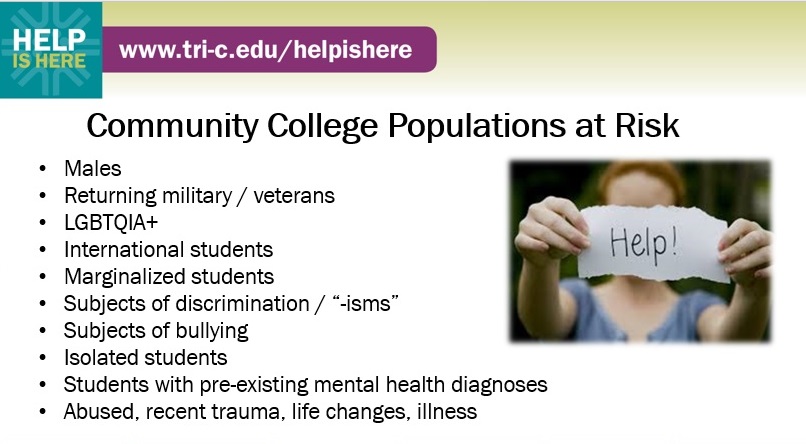
Nardecchia added the Mental Health team had also identified at risk factors such as food insecurity, sexual orientation, past military service, and bullying which can lead to mental illness and suicide ideation among college students. Students who are victims of abuse, are LGBTQIA+, or who are internationals or marginalized are also at greater risk than the general population.
The college has also taken many steps to reduce risk factors. It has sponsored both a Black Council and Hispanic Council for decades, to provide mentoring and programming for these minorities. More recently, each campus developed and opened its own food pantry.
The student group Active Minds (AM) is dedicated to raising awareness about mental health and destigmatizing conversations surrounding mental health issues. AM provides a safe and inclusive space for students to share their experiences, learn about available resources, and develop crucial skills to navigate the challenges related to mental health. AM strives to create a campus environment that prioritizes mental wellness, empathy, and understanding.
Additionally, Tops Peer Influencers are now at all campuses. They are dedicated student leaders committed to promoting health and well-being among their peers at Tri-C. These student leaders, trained and certified through the National Association of Student Personnel Administrators’ (NASPA) Certified Peer Educator (CPE) program, play a crucial role in guiding students towards resources and support while facilitating activities that enhance health awareness and holistic well-being.
The Student Center for Multicultural Engagement is also on all campuses https://www.tri-c.edu/student-life/multicultural-centers
In addition, Tri-C’s team of counselors and psychologist moved to develop what they call a ‘post-vention model’ for both prevention and treatment of mental illness situation. “For any type of campus crisis or incident, we want to be prepared,” Nardecchia explained. “If there was a fire, or something even more tragic, there’s a team of people in place who are trained and prepared to jump right in and help.”
When NEOMED decided to collaborate with Rep. Anielski and the State of Ohio to offer training about mental wellness and suicide prevention, Tri-C got involved with this education programming as well.
MORE RESOURCES, TRAINING AND LATEST HIH VERSION IN APP
In 2024, Tri-C received a $360,000 Mental Health Funding Support Grant from the Ohio Dept. of Higher Education to continue improvements and enhancements to its programming and services. The major program objectives are to recognize those at risk for suicide, intervene with those at risk, and to refer to an appropriate resource wherever possible.
The grant is enabling Tri-C to develop an even more robust program upgrading and redeveloping its HIH mobile app, making greater amounts of material and resources and a one-click link for anyone’s usage. There is also a click in this app to the recently established national Suicide & Crisis Lifeline number, 9-8-8. The app is now available by searching for “Help Is Here” on both the Google Play and Apple App Store sites.
Additionally, the college is partnering with the Ohio Suicide Prevention Foundation to offer QPR – for Question, Persuade and Refer – training to educators and employees to help better see the warning signs of a suicide crisis and know how to respond. The first QPR training session is scheduled for later in February.
The college is also engaging in more training about mental wellness and suicide prevention, through NEOMED and through a newly established Ohio Campus Safety for Programming and Mental Health Board.
Next, Part Two: How HIH is making a difference for Tri-C’s students and others
LINKS TO SOME SOURCES FOR THIS STORY
https://www.cdc.gov/nchs/products/databriefs/db509.htm#ref1#ref1
 eyeoncleveland