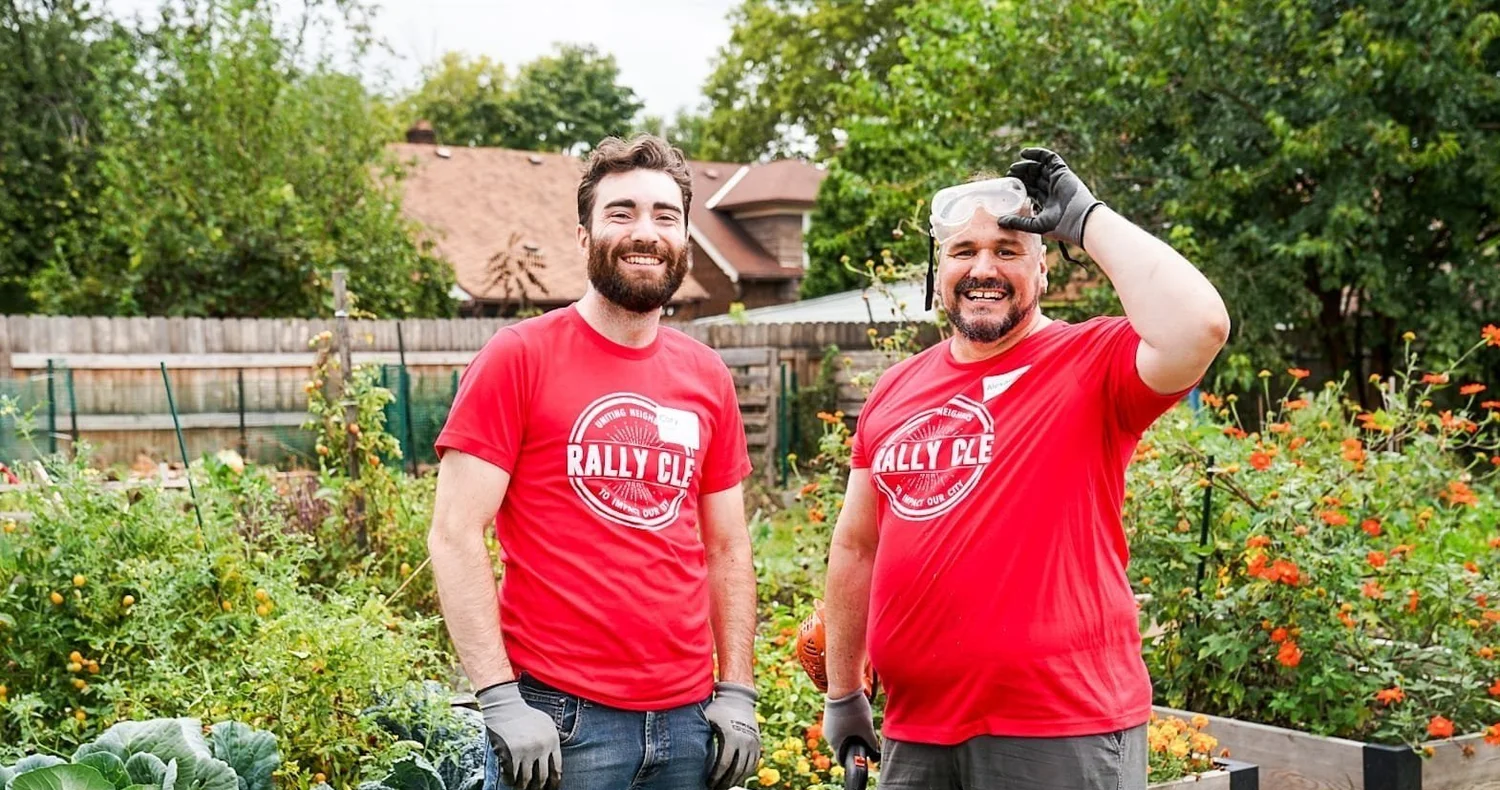
This is Part II in a series of stories about the non-profit ministry Building Hope in the City. See link to Part I at the conclusion of this story and to the Building Hope website as well.
By JOHN KEREZY, eyeoncleveland.com founder
CLEVELAND, Sept. 4 — Building Hope in the City is striving hard to address a fundamental problem which people living on Cleveland’s West Side face, inadequate housing.
Thousands of people living in 44102, the zip code for the Clark-Fulton Stockyards (CSFY) area which Building Hope serves, are in poverty. According to the Center for Community Solutions, 39.9% of the area’s residents are below the federal poverty level, and 53.7% of the children under 18 there live in poverty. Both are significantly higher than averages in the City of Cleveland.
Most researchers agree that good housing is an important key to reducing intergenerational poverty and increasing economic mobility. Stanford economist Raj Chetty discovered that children who moved away from lower poverty neighborhoods saw their earnings as adults increase by approximately 31%, and they themselves had decreased likelihood of becoming single parents.
“Good housing is essential for people living in poverty,” says Brian Upton, executive director of Building Hope in the City. “If you can’t put your kids to sleep in a place that’s clean, safe and affordable, there are huge challenges. We see dilapidated houses, foreclosures and unaffordable rent everywhere. The only good news is that there are a lot of opportunities for God’s people to play a role in turning this around.”
Beginning in 2016, even before it moved its ministry into the neighborhood, Building Hope decided to tackle the housing problem head-on. It went to the Cuyahoga County Land Bank, which was accumulating abandoned homes and razed residential parcels in Cleveland, and asked if it could obtain foreclosed homes in the Clark Fulton Stockyards area.
“I’ll never forget what (the late founder and Land Bank President) Gus Frangos told us,” Upton recalls. “He asked, ‘Why don’t churches come to me? I have a thousand properties that they could redevelop tomorrow,’ He and the Land Bank really turned us on to what might be possible.”
Building Hope took on its first house on West 35th Street in late 2016. It was both a challenge and a learning curve for the ministry.
“We raised private donations, renovated using private resources, and received assistance from a bi-vocational pastor who happened to be a carpenter. We rented the place for $600 a month to a grandmother of one of our ministry partners who was raising two of her grandkids. And the rehab process worked for her and for us.”
Encouraged by initial success, Building Hope chose to obtain foreclosed properties and to renovate them at a slow but steady pace of 1-2 homes a year.


“Part of the challenge was that the inventory (of homes) was getting smaller, but there were a lot of vacant lots,” Upton says. He recalls that BHITC eventually did rehabilitation and renting nearly 10 homes on the West Side. “Then, after much prayer and planning, we decided to take the next step and try to build 14 new homes in the neighborhood.”
Big help from big partners
Because of Building Hope’s decades-long successful track record in meeting the needs of the people it collaborates with – mainly refugees and immigrants, and Cleveland residents living in or near poverty levels – it was able to attract some difference-making assistance from many funding partners.
One such partnership is with the Community West Foundation, based in Westlake. The Foundation and its donors award upwards of $9 million annually to more than 100 non-profits agencies located in the western part of Cuyahoga County and in Lorain County. The Foundation has provided funds to Building Hope since 2006. “Building Hope is now one of our top five grantee agencies in terms of support, says Martin Uhle, president and CEO of Community West.
“Building Hope has grown so much in this time, and our funding has followed that growth. It has a broader array of services than many of our other, more singularly-focused grantees, Uhle explains. “They also have multiple sources of income anchored by social enterprises such as Common Threads Thrift Stores, something that’s just a dream for many non-profits.”
Uhle adds that the Community West Foundation uses Jesus’ parable of serving the least of our brothers and sisters from Matthew 25 as a basis to determine its grant-making. “We look to Building Hope in the City as a provider of multiple of services to strangers who are welcomed here. We think of and care about people who are vulnerable and homeless,” he says. “We have been proud supporters of both the renovated and new housing options which Building Hope has done, and continues bringing online in the Clark-Fulton Stockyards neighborhoods.”
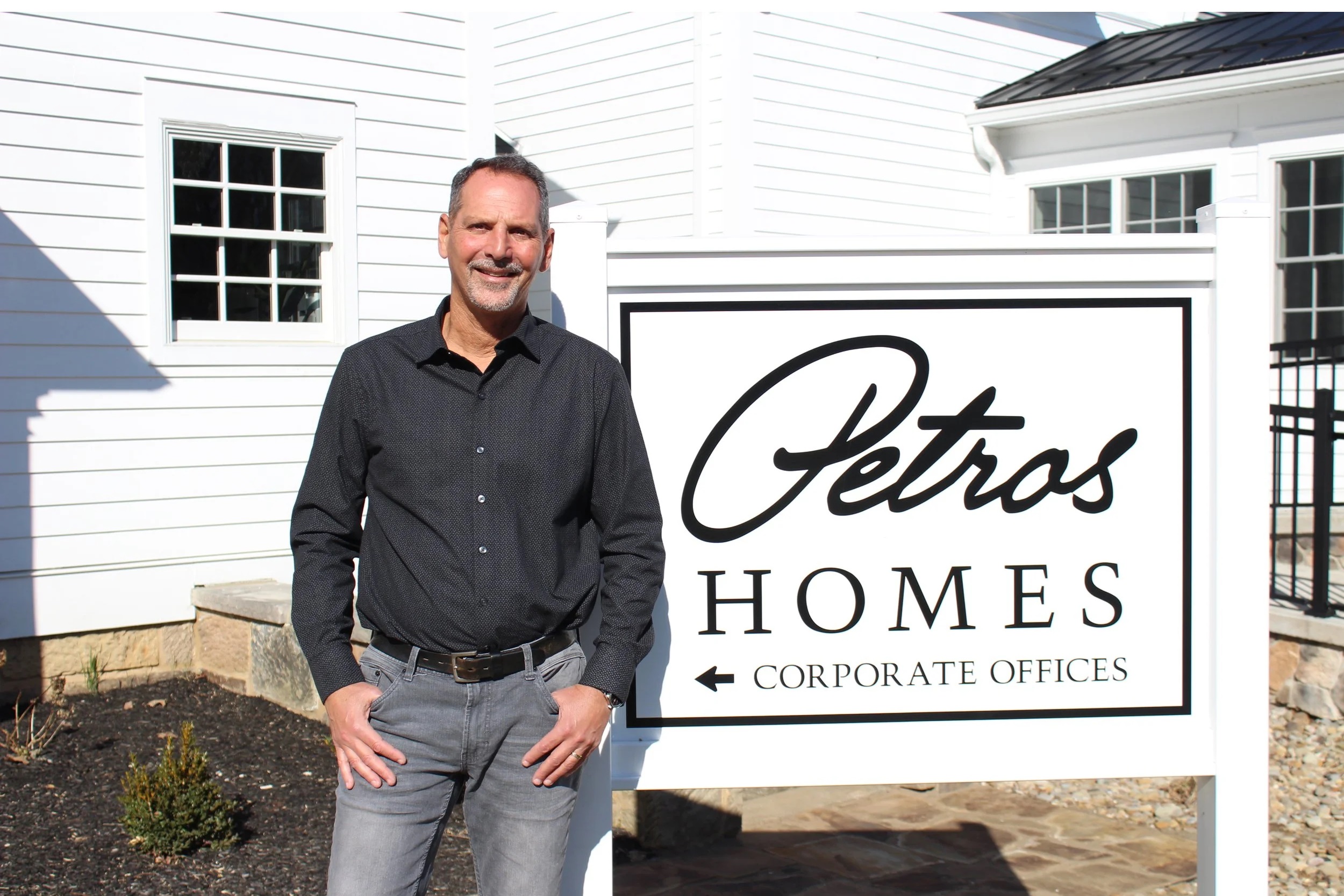
With financial help from the Community West Foundation and many other funders in hand, Building Hope still lacked the experience to navigate the complex and multi-faceted process of building permits, blueprints, site preparation, and new home construction. After much prayer, Upton and the board sought guidance from Northeast Ohio-based Petros Homes. One of the best-known home builders in the area, Petros boasts of custom and innovative homes of lasting quality in neighborhoods of distinction in suburbs such as Avon, Brecksville, Broadview Heights, Westlake and Richfield.
Now, Building Hope was asking Petros to help navigate the home-building process for 14 new, multi-family homes on West 56 Street in the Stockyards area, a poverty-afflicted neighborhood which hadn’t seen new home construction in more than 60 years. It seemed like a daunting task, but nothing is too hard when people of faith respond to God’s calling.
Gary Naim, Petros Homes’ president, is a man of Christian faith. But he also had a multi-million dollar business to run.
“When I met with Brian (Upton) and Jeff (Stredney) and they laid out their plan for new home construction with me, my initial reaction was ‘I’m busy enough with my own business. How can I take this on as well?’” Naim recalls. “But I’ve often felt how God has used me in my homebuilding career, and soon I felt a heavy calling to just say yes and see where it goes.”
(Editor’s Note: Hear eyeoncleveland.com’s interview with Gary Naim here….)
Petros Homes lent its expertise to Building Hope in the approval and permitting process, as well as in the development of architectural plans and site design and layout.
“We also helped walk the project through the various (City of Cleveland) boards and committees for approval,” Naim says. “Building the housing units didn’t fit our structure, but we worked with Building Hope and others to find both Ryan Bodin and Caliper Construction, who handled on-site supervision of the construction. I have stayed involved with weekly construction calls, helping guide decision-making as to what was best for the entire project.”
Naim and others at Petros Homes who have been involved now take great pride in the outcome, as 14 new housing units named Homes of Hope Commons are on West 56 Street between Clark and Storer Avenues. The homes are being made available at rates 20% to 30% below the rental market, and only to people and families either taking part in Building Hope programs or who are referred to the ministry by one of its partners.
“We serve in a very noble industry, and while it may seem more glamorous and luxurious (to many), our job is to build quality shelter for people, a place they are proud to call home. I believe we’ve done just that with Homes of Hope Commons,” Naim explains. “I believe in Building Hope’s ministry and mission, and because of that it became easy to get behind them and provide our expertise and resources.”
Here’s a link to the Community West Foundation website: https://www.communitywestfoundation.org/
Here’s a link to Petros Homes’ website: https://www.petroshomes.com/
Housing is part of a
transformational difference
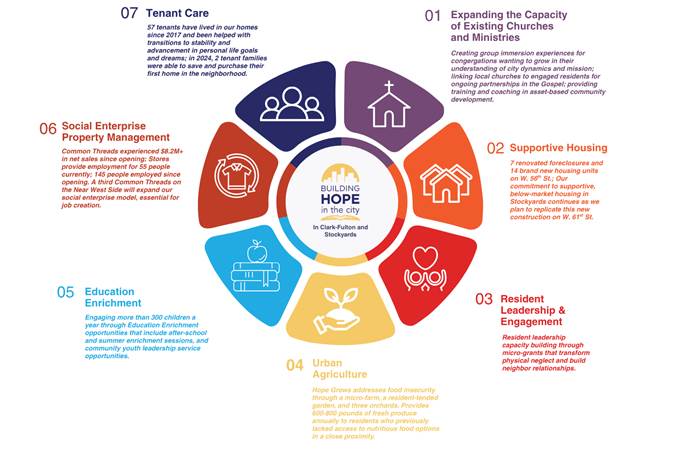
While housing is important, it is only one of several components which comprise the continuum of support and self-help which Building Hope in the City strives to provide for all those it touches. An initial step is partnering with existing churches and ministries and striving to expand their capacity. After that comes housing, and then residential leadership and engagement. Building Hope strives to accomplish this through micro-grants and the “Rally CLE” process (See part I) which helps empower residents to make positive changes in their neighborhood.
Urban agriculture and education enrichment are two more important steps. The urban agriculture program grows 600 to 800 pounds of produce a year for neighborhood residents. Education enrichment consists of both summer and after-school programs, culminating in community youth leadership service opportunities.
Social enterprises, primarily Common Threads, currently employs 55 people and has helped 145 people through employment. The final step in the cycle, tenant care, helps residents with stability and advancement in fulfilling their personal life goals and dreams. Building Hope has helped nearly 60 tenants living in its homes, and two tenant families have gone on to save enough money to purchase their own first houses. (See the cycle below.)
High-flying Gala for Building Hope, Nov. 1
Building Hope in the City will host its annual Restoring the City Gala on Saturday November 1 at Cleveland’s Hilton Inn Downtown. This year’s theme, The Colors of Hope, will highlight the many ways God is restoring lives and communities throughout the city.

The evening will feature dinner and cocktails, live music, and the opportunity to connect with others who share a passion for Cleveland’s future. Guests will also hear stories of impact and a vision for the year ahead.
Proceeds from the event will support Building Hope in the City’s mission to bring hope and renewal to neighborhoods across Cleveland. Attendees can purchase donated items to help support the ministry, and this year there’ll be a special auction of something unique, a Blimp Certificate, good for a ride for two in the Goodyear Blimp.
Only 0.00006 percent of the American public has ever had an opportunity to ride on a blimp. Certificates to fly are highly coveted. Obtaining a ticket to Restoring the City Gala will make it possible for you to bid on a Blimp Certificate at the event.
For more information or to purchase tickets, visit https://my.onecause.com/event/organizations/bfa59d18-b689-4fdd-bffe-a776f6713510/events/vevt:faea3964-1be2-4938-99f1-6b5b9b9cfd23/home/story
Part I of this series of stories: https://wp.me/p6cQl4-12R
Building Hope website: https://www.buildinghopeinthecity.org/
 eyeoncleveland