By JOHN KEREZY, eyeoncleveland.com founder
CLEVELAND, Aug. 23, 2025 — One local non-profit has seen God’s provision in action, guiding and growing its services in the five years after Covid-19. Building Hope in the City (Building Hope) is in the final phase of a Flourish $7.5 million fund campaign which has helped improve its programs, providing homes, creating jobs, and strengthen community connections.
Begun in 1999 as a ministry to assist the homeless and provide tutoring services at one location in Ohio City, Building Hope has expanded its reach a 1,000-fold since then. It has:
- Trained more than 400 Cleveland-area residents in mission service, including more than 20 leaders who have formed 12 new and emerging churches and non-profit groups in Northeast Ohio.
- Assisted thousands of refugees and immigrants who have sought to build a new home in the Cleveland Area. Building Hope offers adult education, employment, immigration counsel, citizenship lessons, after-school enrichment, and other services to help improve the daily lives of ‘the least of these’ newly arrived to the area. Through its Hope Center for refugees and immigrants, Building Hope helps more than 400 people each week.
- Engaged in the marketplace in Cleveland and Northeast Ohio through its Common Threads thrift stores, two resale shops which employ 60-plus people and generate more than $3 million in income. Additionally, Building Hope has opened Peripeti Home, a candle-and-fragrance business which provides jobs to refugee women (see more below). It has also begun two workforce development programs, One World Kitchen (a partnership with Edwin’s Restaurant), an eight-week culinary skills program; and a “caring for people with disabilities” program in partnership with the non-profit Rising Heights.
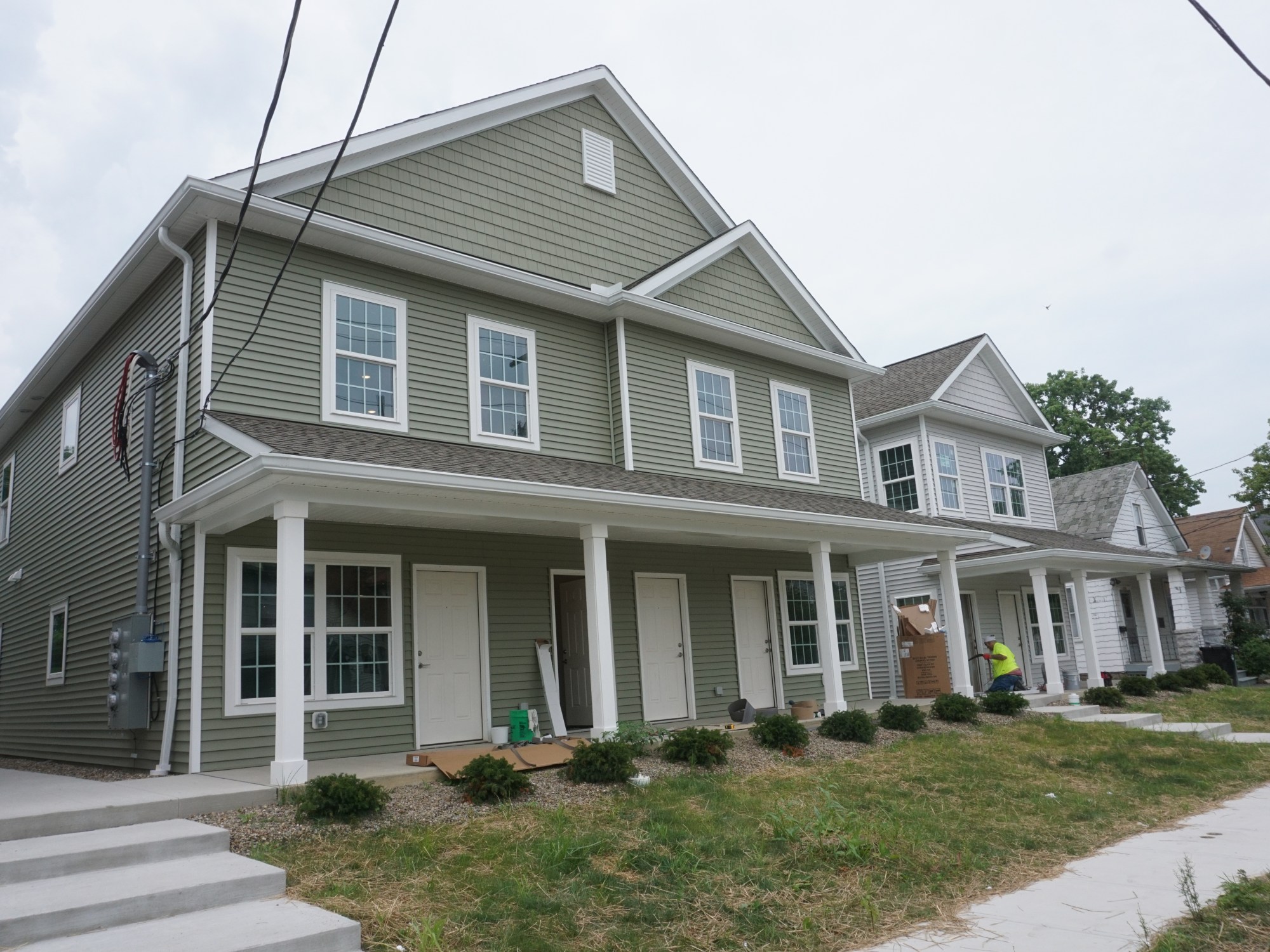
- Committed to help renew neighborhoods in Cleveland. Building Hope has restored 10 abandoned or foreclosed homes (mainly in the Clark-Fulton Stockyards area) to productive use, and later this summer will open 14 new units of multi-family housing in a neighborhood which hasn’t seen new housing construction since the 1960s. And Building Hope has plans to construct 14 more new housing units later on in this decade.
Taking a comprehensive, neighborhood approach
Building Hope’s vision is to advance the good of the city, magnify the mission of Jesus, and unleash the capacity of underestimated people. Andrea Axsom, manager, brand marketing and communications, points out how the non-profit strives to help both people with great needs – such as immigrants and refugees – and to help transform the Clark-Fulton Stockyards (CFSY) neighborhood which became the mission’s home in 2019.
PART ONE of a THREE-PART SERIES OF STORIES
CFSY has more than 70 percent of its residents living at or below poverty levels. Crime, deteriorating housing stock, low educational attainment, the decline of industry, and systematic disinvestment have taken a terrible toll on the area.
“We have been providing tutoring assistance, education enrichment, and other activities to help people in need,” Axsom explains. “But we wanted to move toward a more comprehensive and holistic approach to serving people.


“Housing is an important component to that,” Axsom adds. “There’s blight and crime, and there are the hazards of declining housing, including lead poisoning in the walls of some of the homes here in CFSY. Building Hope decided that if we could support people through providing them with a safe home, and do that in an affordable, below-market way, that – in turn – will help provide stability in many other aspects of their daily lives.”
Former Cuyahoga County Treasurer Jim Rokakis helped found the Cuyahoga County Land Bank and has also formed similar land banks in many counties in Ohio and in other states. He praises Building Hope for striving to turn the housing situation around in CFSY.
“What Building Hope in the City is doing is critically important to that neighborhood,” Rokakis says. “We have a great housing shortage not only in Cleveland but throughout the country. No single organization in town can tackle this problem alone, and Building Hope has established some terrific partnerships in its housing efforts.”
Four years before Building Hope moved its offices to the former Gilbert Elementary School on West 58th Street, it worked with the Cuyahoga County Land Bank to acquire and fix up abandoned homes in the neighborhood. “The Land Bank said basically ‘you can have these houses, you just need to fix them up,’ so we started doing just that,” Axsom states.
Beyond Housing
At the same time, Building Hope continued to grow and further meet its mission in the CFSY neighborhood. Here are a few examples:
- Its Education Enrichment program provides individualized support to students and their families in an area where only about a third of the residents have obtained a high school diploma. More than 30 students receive tutoring, mentoring, and biblical lessons three evenings a week.
- Its Urban Agriculture program is helping tackle the problem of food insecurity through food and nutrition education, farm-to-table cooking, and community gardening.
- Its RallyCLE resident leadership and engagement program offers small grants, project planning assistance, and volunteer/professional support to CFSY residents who desire to take action and help improve their neighborhood. More than 50 RallyCLE-supported projects have resulted in pocket parks, community gardens, kids’ play areas, and outdoor art murals.
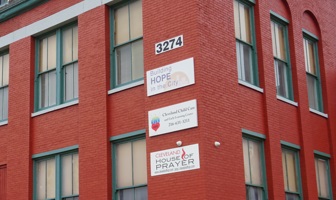

Brian Upton, Building Hope’s executive director, believes in the power of involving the recipients of the ministry’s services in planning and carrying out programs.
“Nearly three-fourths of our core staff are former immigrants and refugees. People who’ve received services in the past are now serving others,” Upton says. “Most of the community development staff we have come from the CFSY neighborhood.
“That is one of the keys to Building Hope’s success to date,” Upton adds. “We’re mimicking the Lord’s teaching ‘the first shall be last and the last shall be first.’ The people that we’re here to serve are actually the people who are co-creating and helping guide as to what effective programs really look like.”
One example: Peripiti Home
Peripeti is defined as “a small thing with significant impact,” and Peripeti Home is doing just that. It creates toxin-free, handcrafted candles while helping women overcome barriers to employment and build a better future.
A social enterprise, Peripiei Home believes that small things, such as the right scent, can have a great impact on the well-being of people and their home environments. Refugee women meet weekly in the basement of Building Hope in the City’s headquarters to make candles for the enterprise.
“Partnering with Building Hope in the City has brought deeper purpose to our work—seeing lives changed through meaningful employment is truly fulfilling,” says founder & creative Kate Walsh. She adds that all products are made using natural ingredients, and the business supports ethical employment practices.
The Peripeti enterprise is personal for Kate, who had once volunteered with building Hope in the City. When she was treated for breast cancer from March 2021 to January 2022, Kate felt called to expand Peripeti’s mission by partnering with Building Hope. That led to the creation of supportive, first-time work opportunities for refugee women, who now help create all of Peripeti Home’s products, including its newest addition: sustainable soy candle refill inserts.
Here’s a link to the news release with more details about Peripeti Home.
Here’s a link to “City Alive” the most recent Building Hope in the City newsletter:
Here’s a link to the Building Hope in the City website: https://www.buildinghopeinthecity.org/
TO SUPPORT BUILDING HOPE
https://www.buildinghopeinthecity.org/donate
(Photos are either by John Kerezy or provided by Building Hope in the City)
 eyeoncleveland