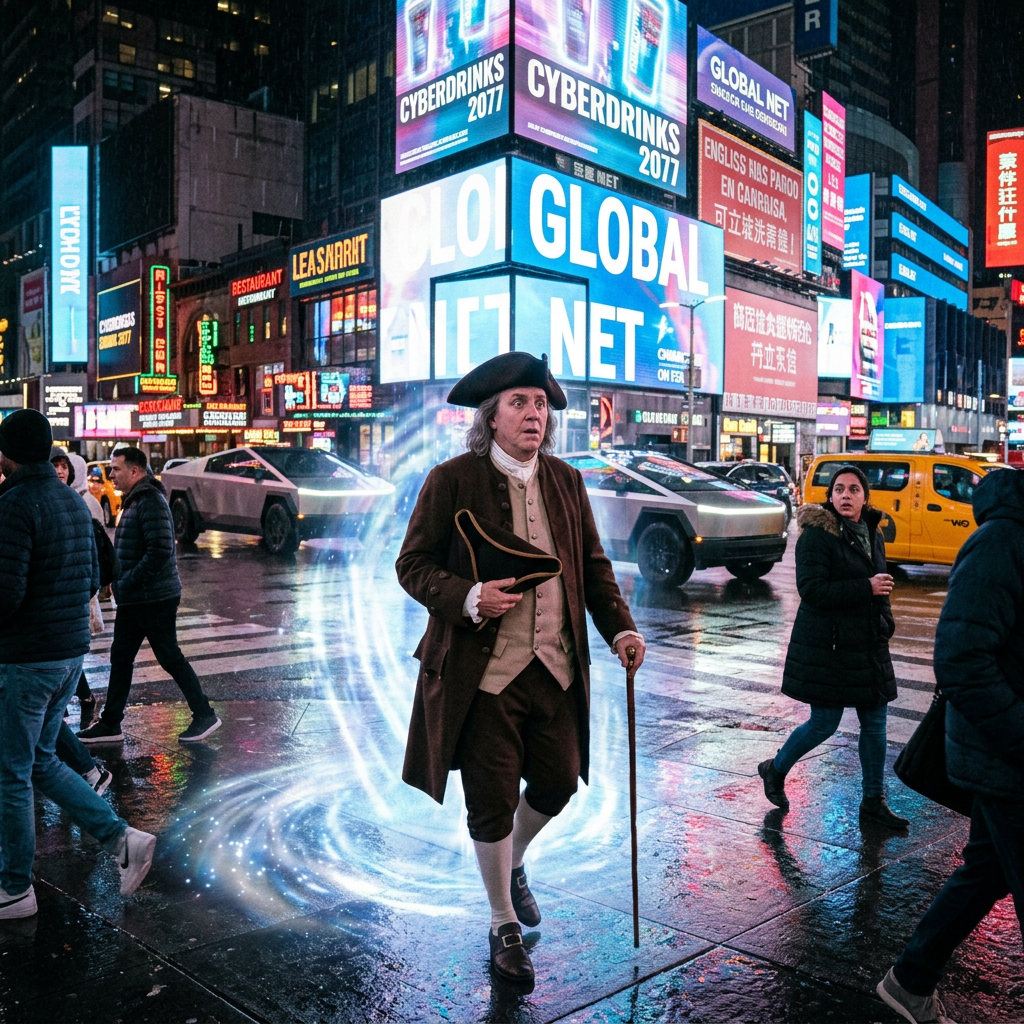
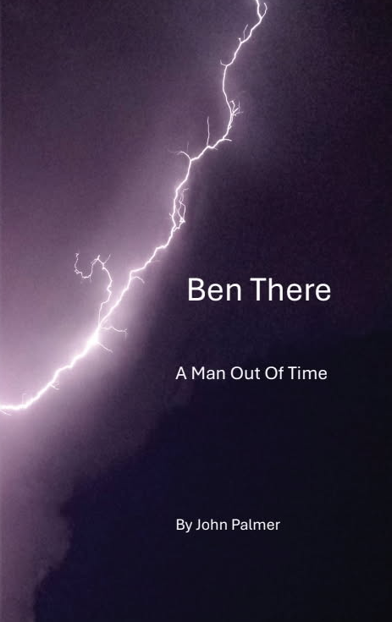
CLEVELAND, OCT. 5 – Combine some calendar chicanery, creative imagination, and sci-fi fantasy and you have “Ben There,” a self-published novel and tale from Cleveland’s John Palmer.
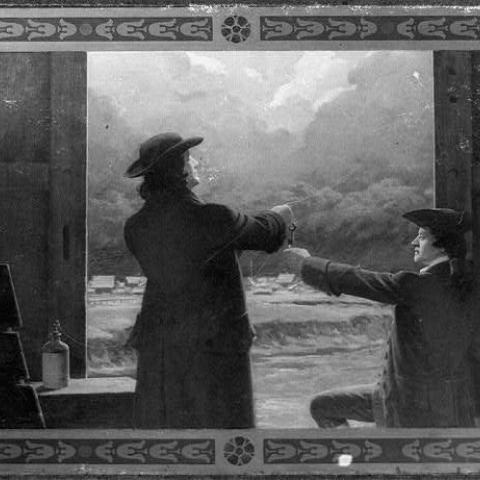
Known as the “cranky arborist,” Palmer has weaved a story which takes one of our most important founding fathers – Inventor Ben Franklin (1706-1790) – forward to the present day from the year 1752. And Palmer selected this year with great care, as it was in June 1752 that Franklin conducted his ground-breaking electrical kite experiment, demonstrating the connection between lightning and electricity.
[ASIDE: Here’s is an explanation of Franklin’s famous kite experiment Benjamin Franklin and the Kite Experiment | The Franklin Institute ]
Also, it was also 1752 when Great Britain and other parts of the world changed over from the Julian calendar to the Gregorian calendar, causing a “loss” of 11 days late that summer. Palmer came up with an inventive way to put those days back into the life of Franklin, but they are in 2026 instead of 1752.
“The idea for this work first came to me about 10 years ago,” Palmer says. “I’m probably not the first person to think of the play on words ‘Ben there’ instead of ‘been there, but it wasn’t until about a year ago that I had a real clue of how it might work.”
At that point, Palmer was already devoted more than a year into his writing a tale that involved a fictional energy production start-up (HygroGen Energy Systems), two of its employees – Aiden and Jess – and Jesse’s father Howard.
“Ben There is a journey. It’s an imaginary tale of what might happen if the 18th century meets the 21st century, and it’s full of conversations, not of explosions or battles,” Palmer explains.
Think of someone in the mid-18th century all of a sudden being part of the 21st century. Everything from ice cubes to electricity, flush toilets to automobiles, and of course the internet and television, would all seem so strange. That’s part of the setting for “Ben There.”
Palmer, who transitioned from a broadcasting career into becoming a professional, certified master arborist, can weave a story. And it’s the type of story which is best read sitting under a tree on a warm early autumn day as well, because “Ben There” is heavy on dialogue between the main characters of the novel.
“I think I started to imagine a time travel type of scenario four or five years ago, but I wasn’t interested in anything like contemporary science fiction,” Palmer recalls. “I had a conversation with my good friend Len Howser, while we were playing golf, and he responded positively to some of my thoughts about making this into a novel.”
“Ben There” is historical fiction with many real dates, names, places, events and technology baked into the story. “This was a stream of consciousness effort,” Palmer readily admits. “I just started, and I didn’t know how it would end until a few months before I finished. I was constantly inventing things up as I went along.”
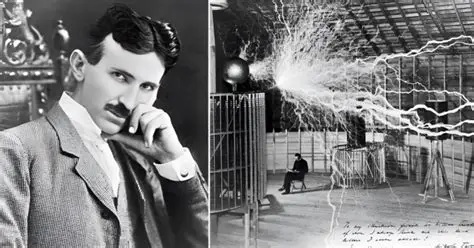

The novel contains many true-to-life sub-stories, mainly surrounding another inventor, Nikola Tesla (1856-1943), the electrical engineer and futurist who developed the alternating current (AC) system of supplying electricity to homes and businesses.
“Tesla and his important work play an integral role in the novel,” Palmer adds. “He figured out a way to provide power to light bulbs miles away without any wires, caused an earthquake, and once knocked out power to the city of Colorado Springs. People reading the book will learn more than they ever imagined (about Tesla’s work) as the characters’ pursuit of it is part of what ‘brought’ Ben to them.”
[Want to learn more about Tesla? Here’s the Encyclopedia Brittanica entry about him: Nikola Tesla | Biography, Facts, & Inventions | Britannica ]
Even the company name, HygroGen, is tied to Tesla. “Hygrogen is actually a Tesla concept of measuring humidity and electricity in the atmosphere, with the hope of eventually capturing it,” Palmer explains. “Tesla is an under-recognized innovator and pioneer in the advancement of electricity. He’s much more than an automobile brand name.”
While not a morality novel, “Ben There” presents its main characters in a realistic and honest way. They are doing routine day-to-day activities (such as cleaning up a yard, playing chess) and that adds to the lure of the story.
“Many of our ancestors lately have been portrayed in a negative light,” Palmer says. “Ben has an innate curiosity, and he’s encouraging people to always be curious and to ask questions, to check things out for yourself and not take your cell phone’s word for anything.”
Palmer calls the novel one of the most fun things he’s ever done.
“Even if I don’t sell a single copy, I have a great sense of accomplishment about ‘Ben There’ as a story,” he says. “I’m hoping to create some interest by revealing just a little, and letting that, plus the cover, let people figure it out for themselves.”
Want to think about how Ben Franklin would react to all the inventions and conveniences of our lives in 2026? “Ben There” will help you do just that.
TO ORDER: http://www.bentherebook.com/
http://www.eyeoncleveland.com founder John Kerezy wrote this story. Cover illustration created using Artificial Intelligence.
TO CONNECT WITH THE AUTHOR: @crankyarborist

