PART ONE IN A SERIES
(Editor’s Note: this website will be featuring three stories about the 60th anniversary of Cuyahoga Community College’s Western Campus, which opened in 1966. Eyeoncleveland.com’s founder John Kerezy is the author of this story. Former Western Campus students Hannah Mayer and Christina Easter will be writing the next stories in the series.)
CLEVELAND, APRIL 22, 2026 — More than 670,000 American GIs were wounded in action during World War II, and the Pentagon struggled mightily to provide adequate medical treatment for them. Those requiring long-term care were transported from field hospitals back to the U.S. Once the U.S. entered the War, the Army Department rapidly constructed dozens of “Zone of Interior” (inside the country) General Hospitals, medical facilities which were staffed and equipped to treat patients requiring complex medical or surgical care.
One of those was George W. Crile Hospital, which began in Parma at the corner of York and Pleasant Valley Roads in 1943. Opened in April 1944, it consisted of 87 buildings and more than 1850 beds on 153 acres of what once had been farmland in the communities of Parma and Parma Heights. It was named after Cleveland’s Dr. Crile, a surgeon who served in the U.S. Army Medical Corps in the Spanish-American War and World War I. A co-founder of the Cleveland Clinic, he’s also the first surgeon to conduct a successful blood transfusion.
A PLACE TO HEAL
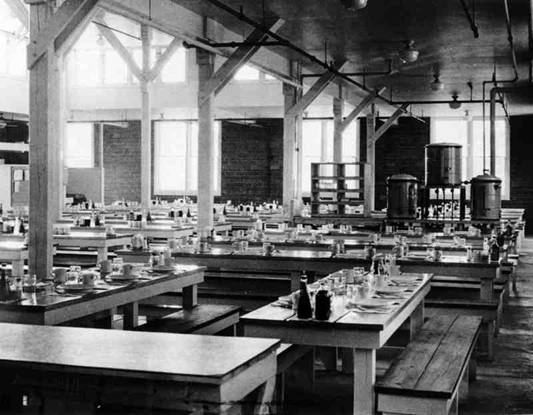
Like many others in the Dept. of Army system, Crile was planned as a temporary army hospital. Most of the buildings were steel Quonset huts, although there were some brick buildings as well. Seven miles of corridors connected the various buildings of the hospital.
More than 15,000 GIs were treated at Crile Hospital. The grounds also contained a Prisoner of War camp, and about 250 German and Italian soldiers were held there until the war’s end in 1945.
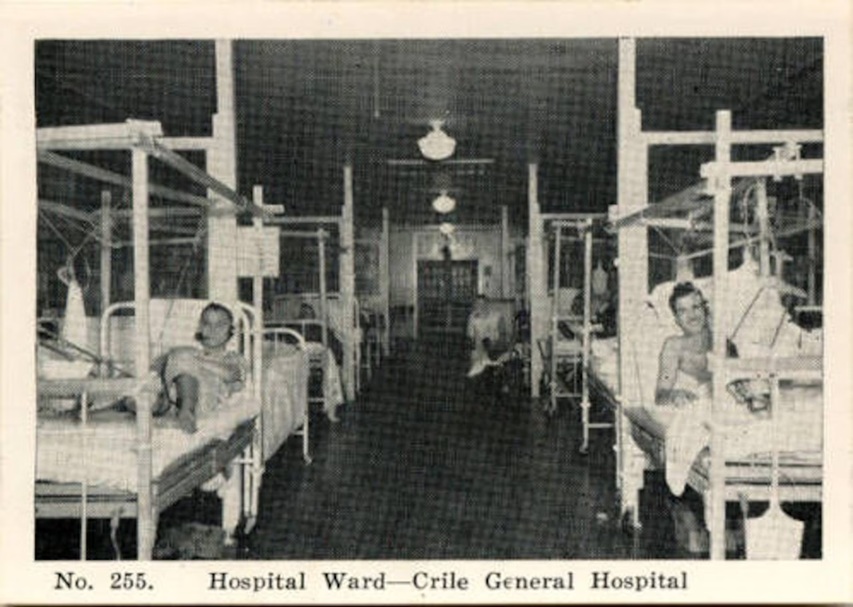
The facility was then turned over to the Veterans Administration in June 1946 and converted into a 1,000-bed general medical and surgical hospital for all veterans, from the Spanish-American War through World War II. It became known as Crile Veteran’s Administration Hospital. Its specialized services included a rehabilitation program and ward for (what was then called) paraplegics, reconstructive hand surgery, and an ophthalmology dept. Many of the patients there were long-term.
HOT SPOT IN THE COLD WAR
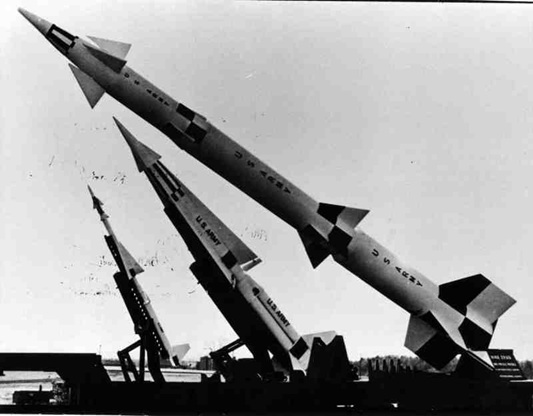
The property took on a secondary role, also important, during the Cold War of the 1950s and ‘60s. A post-war manufacturing and industrial juggernaut, Cleveland was seen as a probable prime target for Soviet Union bombers if an actual shooting war ensued. To protect Cleveland and nearly 300 cities and high-security industrial sites, the U.S. Army installed Nike missile battery sites, designed to shoot down enemy attackers which evaded U.S. interceptor jets.
Of these, eight were built in Northeast Ohio. One of them was placed just south and west of Crile General Hospital, at about the site where the pond and water fountain sit off the Pleasant Valley Road entrance to Cuyahoga Community College today. The 187-acre, “L” shaped site, designated CL-59, also occupied what is Nathan Hale Park and James W. Day Park today.
“The Nike missiles were part of an air defense system that was designed to counter Soviet Union bombers,” Miller adds. “It was never used, but people remember seeing the missile site which was on the grounds from about 1956 to 1964.”
Just a year earlier, in 1963, Cuyahoga Community College had begun operation at its (only) Metropolitan Campus. Plans called for three campus locations eventually. James Day, Mayor of Parma, saw an opportunity. Having served in World War II as a navigator with the U.S. Army Air Corps, he was intimately familiar with Crile Hospital.
Mayor Day convinced the VA to turn the land over to the City of Parma, and then he worked with other elected officials to provide 32 acres of land there for creating the Western Campus of Cuyahoga Community College. The college opened that campus with an initial group of students in September 1966, 60 years ago.
Want a timeline of how Crile Hospital became Cuyahoga Community College’s Western Campus? See below.
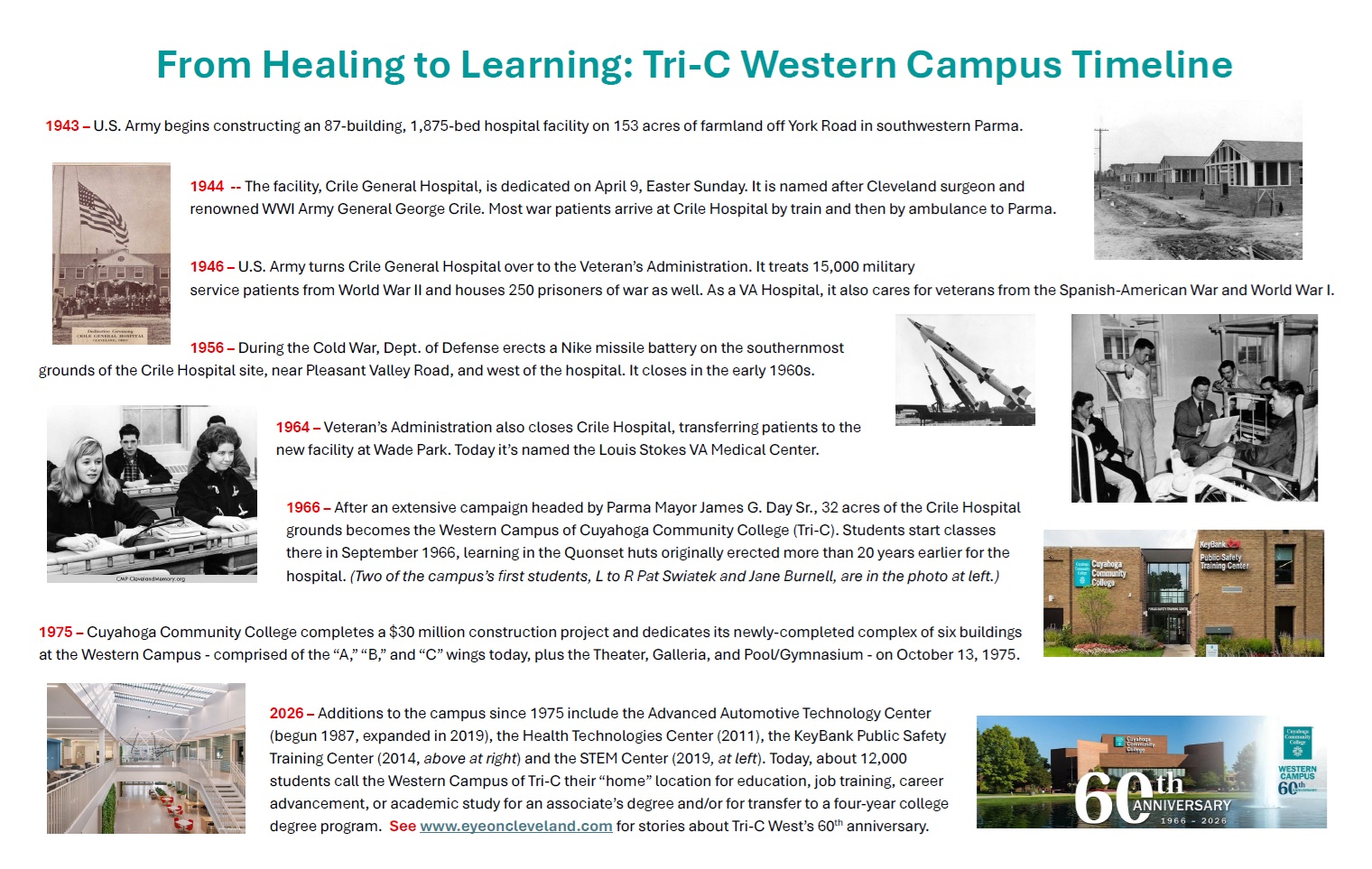
FROM HEALING TO LEARNING
Quonset huts which once housed medical and surgical beds now became classrooms. Over time, Cuyahoga Community College replaced the World War II-era buildings with six permanent interconnected “brick and mortar” structures, a $30 million building project which were dedicated on October 13, 1975. These are now called the A, B, and C wings of the campus, as well as a central commons (called the Galleria), a pool and gymnasium, and a 466-seat theater.
“The history and layout of Grile General Hospital influenced the college’s physical design, also our student support philosophies,” Miller adds.
There have been numerous additions to the campus since 1975, including a Technology Learning Center, the Advanced Automotive Technology Center, Health Careers and Sciences, the KeyBank Public Safety Training Center, and the STEM (science, technology, engineering and mathematics) Center.
FULL CIRCLE
Cuyahoga Community College will have a variety of activities to celebrate the 60th anniversary of its Western Campus, beginning with special celebrations for community leaders and key educational and geographical stakeholders near the campus later this week.
There are more than 1,000 course offerings at the Western Campus today, including many learning opportunities for seniors aged 55+ in the college’s Encore Program. One constant connection with the college’s past, present, and future has been the family of James Day. Three generations of Mayor Day’s family have taken classes on Tri-C’s Western Campus, including his son and granddaughter.
Last fall, the James W. Day Sr. Trust made a $25,000 gift to cover the cost for 250 learners in the Encore Program. This is a form of “full circle” donation which makes Cuyahoga Community College even more available for advancing learning.
“We are deeply grateful for this generous gift, which opens doors for hundreds of adults to continue learning and growing,” said Rebecca Rahschulte, Ph.D., president of the Western Campus. “Lifelong education empowers individuals to stay engaged, discover new passions and strengthen their connection to the community.”
WATCH
The video “Battle Scars: Portrait of an Army Hospital” tells the story of Crile Hospital and how it became a place of healing for thousands of wounded soldiers returning from World War II and for years beyond. Producers: James Banks and Allen Gunnison. Here’s the link:
https://studio.youtube.com/video/e-nM_-Rt3cc/edit
SEE A STORY
In June 2017, Cleveland.com posted a video of an interview with Arlene Nest Watts, who was a cadet nurse at Crile Hospital during World War II. Here’s a link to it:
SOME SOURCES
Laura DeMarco, Cleveland.com, “D-Day 75th anniversary: Crile Military Hospital had important role in the war,” https://www.cleveland.com/life-and-culture/g66l-2019/06/fd121a51128828/dday-75th-anniversary-crile-military-hospital-had-important-role-in-the-war-vintage-photos.html
Jennifer Pflaum, “Crile Military Hospital” https://clevelandhistorical.org/items/show/316
Case Western Reserve University, Encyclopedia of Cleveland History, https://case.edu/ech/articles/v/veterans-administration-medical-center
Case Western Reserve University, Encyclopedia of Cleveland History, https://case.edu/ech/articles/n/nike-missile-bases
Cuyahoga Community College, Donation Expands Encore Offerings at Western Campus, https://share.google/4Pg1IWTuOW4peqOqF
World War II U.S. Medical Research Centre,
https://www.med-dept.com/articles/ww2-military-hospitals-zone-of-interior/
NOTE: Kerezy is an associate professor of Media & Journalism Studies at Cuyahoga Community College. He can be reached at john.kerezy@tri-c.edu

