
By JOHN KEREZY, eyeoncleveland.com founder
FIRST IN A THREE-PART SERIES: eyeoncleveland.com is examining the United States, 250 years after its founding, from three perspectives. This first story is historical, focusing on America’s long history of not being united.
The second story in the series will examine the philosophical and religious underpinnings of America. It will appear around July 4-5.
The third story in the series will examine America’s government from a financial lens. It will appear around July 14-15. Hope you enjoy the read.
CUYAHOGA FALLS, June 29 – Just how polarized is America? As we celebrate our nation’s 250th anniversary, polling paints a pretty stark picture. Various surveys point this out:
- 87% of Americans are tired of political division (Starts With Us)
- 87% say political polarization is a threat to America. (AP/NORC)
- 86% of Americans say that they feel exhausted by the division in America. (Hidden Tribes)
- 81% are concerned about “political divisions within the country.” (Fox News)
- 77% of voters believe that Americans who strongly support the other side are “a clear and present danger” to America. (UVA Center for Politics)
“It’s never been this bad,” some people say, and many more concur.
But it’s just not true.
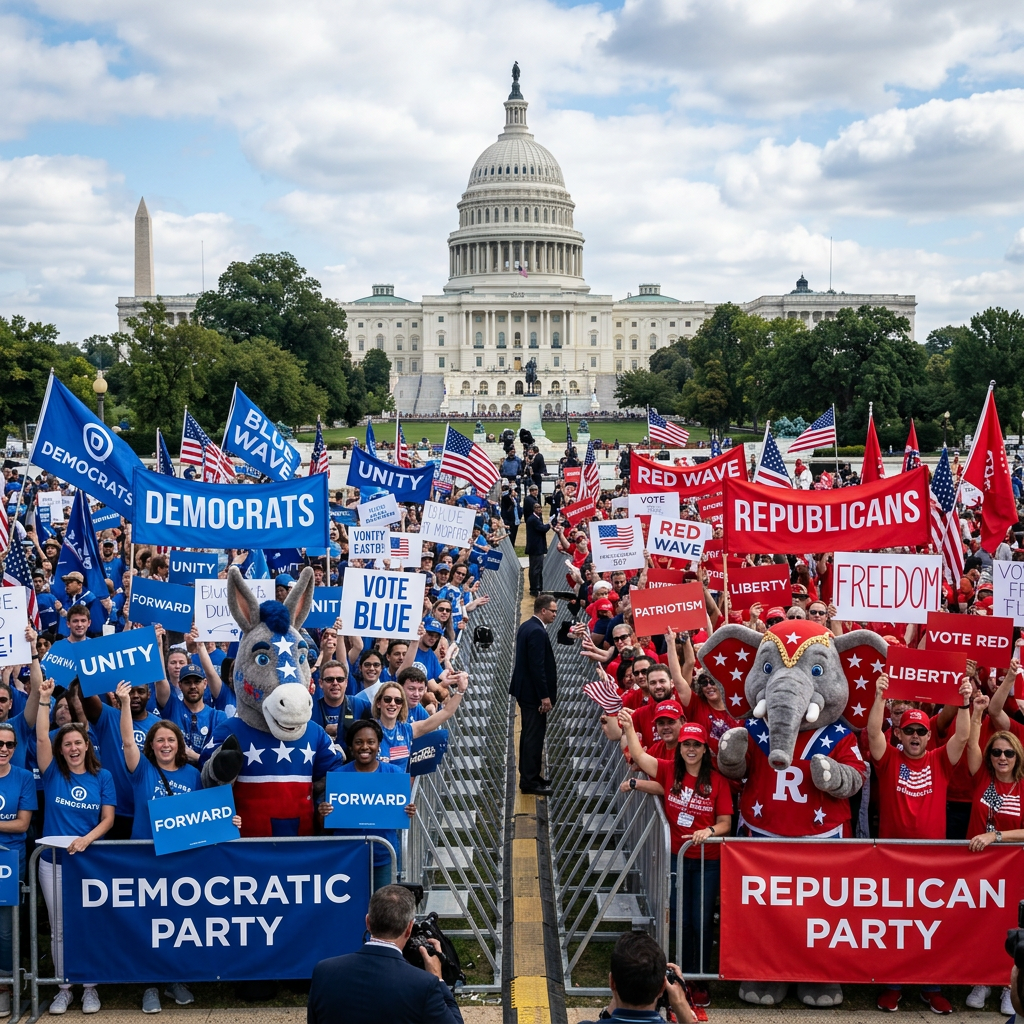
In fact, with the exception of the time around two major events — December 7, 1941, and September 11, 2001 — disunity has been a hallmark of the American experience. Perhaps we shouldn’t be surprised at that. Some of our Founding Fathers believed it would always be the case for the United States.
In a letter to a fellow signer of the Declaration of Independence, sent in 1813, John Adams, second president of the US, wrote, “Divided we ever have been, and ever must be.”
Was Adams correct? Let’s look at the record.
WAR FOR INDEPENDENCE SEPARATED AMERICANS FROM AMERICANS
History books remind us that there was no unity in the 13 American colonies at the time of the Revolutionary War. There were vast differences between the New England colonies (focused on trade and manufacturing) and the Southern colonies (focused on large farms and plantations, and rooted in slavery) as they developed.
And, despite representatives from 13 colonies agreeing to the Declaration of Independence, there was no popular consensus on splitting from Great Britain and becoming an independent United States either.
Researchers point out that, among the estimated 2.4 million people living in (what became the) U.S. at that time, only 40% supported independence. Another 20% were called Loyalists, as they favored keeping their respective colonies under British rule. The other 40% were undecided, some of whose sentiments changed as the conduct of the Revolutionary War ebbed and flowed. For example, tens of thousands of New York City residents supported the Loyalist cause when British soldiers occupied their city from 1776 to 1783.
Who fought in the war, and for which side?
230,000 men served in the Continental Army, although never more than 48,000 soldiers at any one time. In addition, there were about 145,000 more men who served at least one term in the various state militias during the Revolution. This totals about 375,000 men who fought at some point for independence.
For the Loyalists, estimates are that about 25,000 colonial men opposed independence by fighting in units supporting Great Britain and its allies. Some made up regiments formed locallly, and fought as auxiliaries to regular British soldiers. Others, like the British Legion from New York, were provincial units operating independently but under British Army commanders such as Colonel Banastre Tarleton, made infamous in the movie “The Patriot.”
When the Revolutionary War ended and Great Britain granted American independence, estimates are that about 85,000 Loyalists (2% of the population) fled from America, never to return. These exiles included William Franklin, royal governor of New Jersey and Benjamin Franklin’s son; Thomas Hutchinson, governor of Massachusetts; and Joseph Galloway, prominent Pennsylvania official and former delegate to the Continental Congress. Most white Loyalists settled in Canada. Many Black loyalists relocated to Caribbean islands.
DIVISIVENESS FERMENTS
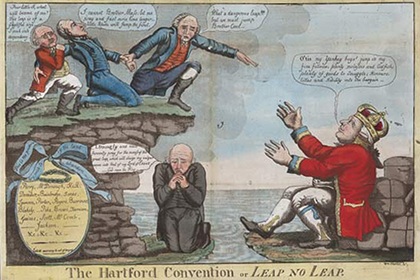
After Independence, unity was always elusive for the United States. Members of the Federalist Party opposed the War of 1812, including leading statesman Daniel Webster. Frustrated by the war’s economic ruin, 26 delegates, mainly Federalists from New England, held the Hartford Convention in late 1814 to air grievances. Some at the convention discussed and wrote about secession from the Union.
Once the war ended, the issue of slavery threatened political upheaval in the U.S. The territory of Maine had petitioned to become a state, and Southern senators were alarmed because they feared that adding two more “Northern” senators would make the legislative branch of the federal government anti-slavery. The solution? Missouri was admitted to the Union as a slave state and Maine as a free state, simultaneously. Congress adopted the Missouri Compromise of 1820, whose champions included Webster and Kentucky Speaker of the House Henry Clay, and which also set a geographic border for the expanse of slavery along the 36° 30’ parallel for the rest of the Louisiana Territory. This compromise took place a dozen years AFTER international slave trade had been abolished in the U.S.
In the mid 1840s, prominent members of the Whig Party saw the Mexican-American War as an unconstitutional land grab designed to expand slave territory. John Quincy Adams, once president and then a member of Congress, screamed “Nay” on the House floor in opposition to the War. Ohio Senator Thomas Corwin gave a notable anti-war speech. Kentucky Senator Henry Clay was against the war, and a freshman Congressman from Illinois named Abraham Lincoln introduced resolutions challenging President Polk’s claims on how the war started.
HOUSE DIVIDED: THE REAL CIVIL WAR
About 700,000 soldiers, North and South, died between 1861 to 1865 as a result of the Civil War. This is more than World War II (410,000) or Korea (36,500) or Vietnam (58,200). In fact, more American soldiers died in the Civil War than all other conflicts, combined.
The single deadliest day in American history was at the Battle of Antietam in Maryland on September 17, 1862. There were 3,675 American and Confederate soldiers killed, more than those who died on D-Day or on September 11. The issue that propelled Southern states to try to leave (or secede) from the United States was slavery.
With foresight, Abraham Lincoln predicted in a speech at Springfield, Illinois, in 1858 that “A house divided against itself cannot stand.” Lincoln knew his Bible, as the expression “house divided against itself” appears in three New Testament gospels (Mark 3:25, Matthew 12:15, Luke 11:17). Texas Senator Sam Houston warned “A nation divided against itself cannot stand” in Congressional debate on the Compromise of 1850, another legislative effort to quell national divisiveness over slavery.
The abolition of slavery movement was growing ever more powerful in the North in the decades prior to the Civil War. The first publication of Uncle Tom’s Cabin in 1852 further aroused abolitionist sentiment. The book was banned in many Southern states. The passage of the Kansas-Nebraska Act of 1854 led to violent armed conflicts between pro-slavery and anti-slavery forces in what became called “bloody Kansas” in the succeeding years.
Massive political outrage occurred in Northern states in early 1857, when the Supreme Court of the U.S. ruled in the Dred Scott case. Scott, a slave, had fled to a free state. Not confining its ruling to just one person (Scott) the Supreme Court also determined that:
- Black Americans were not citizens
- Congress could not ban slavery in U.S. territories
- The Missouri Compromise was unconstitutional
The decision incensed abolitionists and the anti-slavery cause. In late 1859, Southern pro-slavery sentiment became equally inflamed when abolitionist John Brown raided the U.S. government armory at Harper’s Ferry, Virginia. He believed that by seizing Harper’s Ferry, supplying weapons to local slaves to create an emancipation army, and establishing a “liberated” stronghold in Appalachia, he’d create a snowball effect that would lead to the abolition of slavery.
Brown’s uprising failed. Brown was captured, convicted of treason, and executed. But it was a major catalyst for the events of 1860. By then, firebrands in many Southern states felt that if a pro-abolition candidate was elected President that year, they would see federal efforts to end slavery. So, in response to the election of Abraham Lincoln, a member of the newly-formed Republican Party, several Southern states seceded from the Union – even before Lincoln took office. That action precipitated the Civil War.
After the conflict began with fighting in April 1861, Lincoln still hesitated on slavery. He hoped – vainly – that perhaps Southern leaders would change course and seek to return to the Union. It wasn’t until after the Battle of Antietam in September 1862 that Lincoln issued the Emancipation Proclamation, a wartime measure which abolished slavery in rebellious states (but not in those “Border states” which had remained in the Union, such as Maryland).
To tackle the myriad of problems the Civil War presented, Lincoln assembled a cabinet full of bright minds with various opinions on how the federal government should proceed. “A Team of Rivals” was how historian Doris Kearns Goodwin described the cabinet in her book. Dissension abounded within Lincoln’s cabinet. For example, the various secretaries couldn’t even agree upon whether Lincoln should even issue the Emancipation Proclamation in the first place.
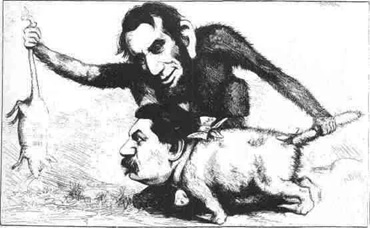
Among the dissenting voices criticizing Lincoln was the press at the time. Editorial cartoons characterized him as a baboon or an imbecile. In his home state of Illinois, the Chicago Times (a Democratic paper) ruthlessly attacked the president. It assailed one of Lincoln’s speeches, “as silly flat and dishwatery utterances of the man who has to be pointed out to foreigners as the President of the United States.”
The Chicago Times further stated that “the cheek of every American must tingle with shame” upon reading a speech Lincoln gave. The speech in question: The Gettysburg Address.
It took the successful prosecution of the Civil War, the end of the Confederate government, and the surrender of all Confederate armed forces in 1865, to accelerate the abolition of slavery. Yet it was various constitutional amendments (mainly the 13th Amendment, passed and ratified later in 1865), that put an end to slavery and much of the evil associated with it.
No, the Civil War didn’t assure Black Americans of equal treatment under the law. That fight continues more than 150 years afterwards. But in the death and destruction of the Civil War, the world saw just how divided America was over the issue of slavery.
MORE RECENT EXAMPLES
Montana Representative Jeannette Rankin was a lifelong pacifist. The first woman elected to the House of Representatives, she was one of 50 House members who voted against the Declaration of War that put the U.S. into World War I in 1917. She was also the only member of the House who voted against the Declaration of War against Japan in 1941.
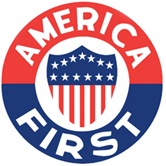
But even before Pearl Harbor, the America First Committee had been formed in 1940. Founded at Yale Law School, America First advocated isolationism and opposed all efforts to help Great Britain in its war (World War II) against Germany. There were 800,000 America First Committee members in 450 chapters across the country. Prominent leaders of the movement included Charles Lindbergh and Father Charles Coughlin, Henry Ford, and actress Lillian Gish. The group dissolved on December 11, 1941 — the very day Nazi Germany and Fascist Italy both delared war on the United States.
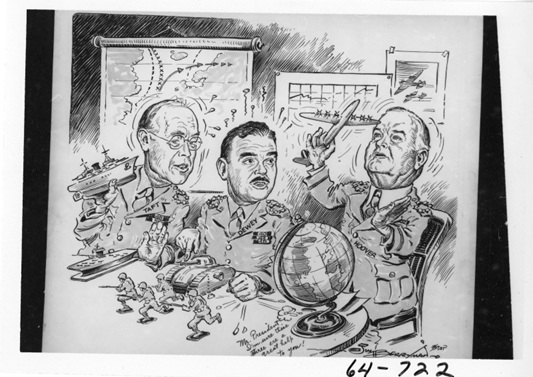
Ohio Senator Robert Taft protested President Truman taking of “police action” by sending U.S. soldiers to Korea in the second half of 1950 to repel the Communist North Korea’s invasion of South Korea. In 1951 joint hearings, the Senate Armed Services and Foreign Relations Committees heavily criticized Truman’s management of the Korean conflict.
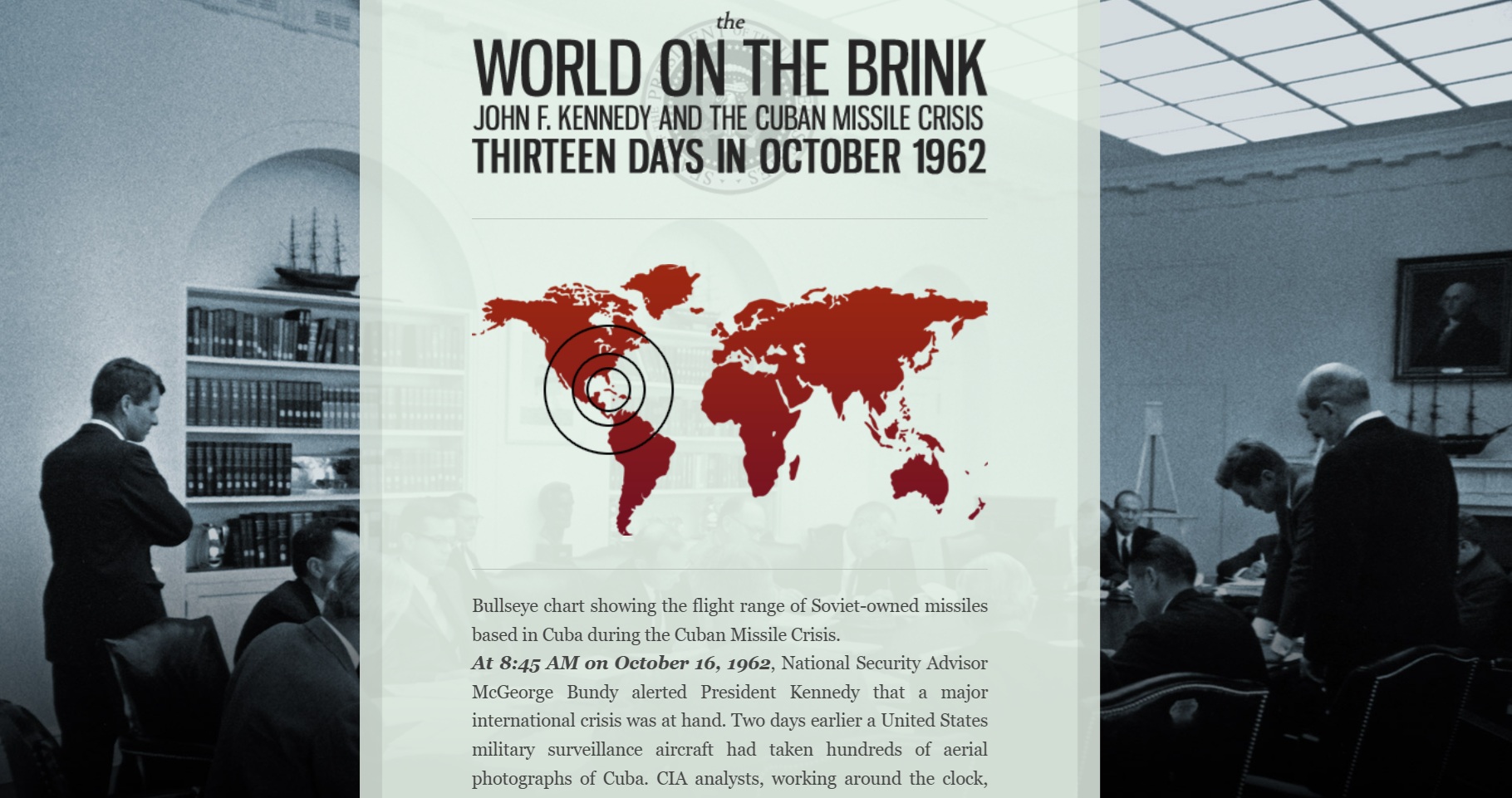
President John F. Kennedy’s handling of the Cuban Missile Crisis is still studied today and held up as an example of excellent leadership and decision-making during the high-pressure, 13-day political crisis and military standoff in October 1962. But Kennedy had opponents to his actions even within his own cabinet and circle of military advisers. Members of the Joint Chiefs of Staff wanted war in Cuba.
One of them, General Curtis LeMay – Air Force Chief of Staff – called for massive air strikes against the missile installations and other military sites in Cuba, followed by a full-scale invasion of the island. By not trusting his own military’s hawkish advice and relying instead on diplomacy, Kennedy probably prevented nuclear war and/or World War III from beginning.
During Vietnam, Congress passed the bipartisan Cooper-Church Amendment (1971) and the Case-Church Amendment (1973), which cut off all funding for U.S. military operations in Indochina. Clashes between President Nixon and Congress over the Vietnam War eventually led to the passage of the War Powers Resolution in late 1973, which limits the authority of the President to commit U.S. forces to armed conflict without Congressional consent. Today, we hear members of Congress from both political parties discussing the War Powers Resolution with respect to President Trump’s military actions against Iran, begun earlier in 2026.
Americans have both participated in and witnessed a variety of public protests, including during the Civil Rights movement in the 1960s, Anti-Vietnam War Protests, and more recently, the George Floyd and No Kings protests.
United? Hardly.
Yes, President John Adams, there’s a lot of truth to what you wrote in 1813.
Read and follow www.eyeoncleveland.com for all three parts of this series of stories
SOURCES USED INCLUDE
Statistics cited at the beginning of the article all have their own respective links. Here are a couple more:
80% of partisans believe that the other party “poses a threat that, if not stopped, will destroy America as we know it.” (NBC News)
45% of Americans think members of the opposing party are “downright evil.” (SNF Agora Institute)
Paul Starobin, “United We Stand,” https://americanaffairsjournal.org/2020/11/united-we-stand/
Thomas Hand, “Patriots, Loyalists and America’s First Civil War,” https://www.americanacorner.com/blog/patriots-vs-loyalists
National Park Service, https://www.nps.gov/articles/federalist-opposition-to-the-war.htm
National Park Service, https://www.nps.gov/teachers/classrooms/u-s-compromise.htm
Encyclopedia Brittanica editors, https://www.britannica.com/question/Was-there-opposition-to-the-Mexican-American-War-within-the-United-States
National Academy of Sciences, https://www.pnas.org/doi/10.1073/pnas.2414919121
Bill of Rights Institute, https://billofrightsinstitute.org/essays/harriett-beecher-stowe-and-uncle-toms-cabin/
Bill of Rights Institute, https://billofrightsinstitute.org/lessons/dred-scott-v-sandford-dbq/
National Park Service, https://www.nps.gov/articles/john-browns-raid.htm
National Park Service, Freedom at Antietam, https://www.nps.gov/anti/learn/historyculture/freedom-at-antietam.htm
Berry Craig, Kentucky AFL-CIO, “Trump flunks history; the press pilloried Lincoln as an ape, boor, buffoon, treason’s masterpiece,” https://ky.aflcio.org/news/trump-flunks-history-press-pilloried-lincoln-ape-boor-buffoon-treasons
https://history.house.gov/People/Listing/R/RANKIN,-Jeannette-(R000055)
Teaching American History, https://teachingamericanhistory.org/document/a-foreign-policy-for-all-americans/
John F. Kennedy Presidential Library, https://share.google/6qUzbz4Z8ZuGa4YKf
Julian E. Zelizer, The American Prospect, “How Congress Helped End the Vietnam War,” https://prospect.org/2007/02/06/congress-helped-end-vietnam-war/
CARTOON/ILLUSTRATION SOURCES INCLUDE
University of Connecticut School of Law
Western Reserve Historical Society
Harry S. Truman Library and Museum of the National Archives
John F. Kennedy Presidential Library
In about a month, I’ll be retiring from my position as associate professor of media and journalism studies at Cuyahoga Community College. Eyeoncleveland.com, begun in part as an outlet for my writing students, will continue. If you wish to stay in touch with me, you can do so at johnkprof@gmail.com

